
When companies suddenly look greener than they really are
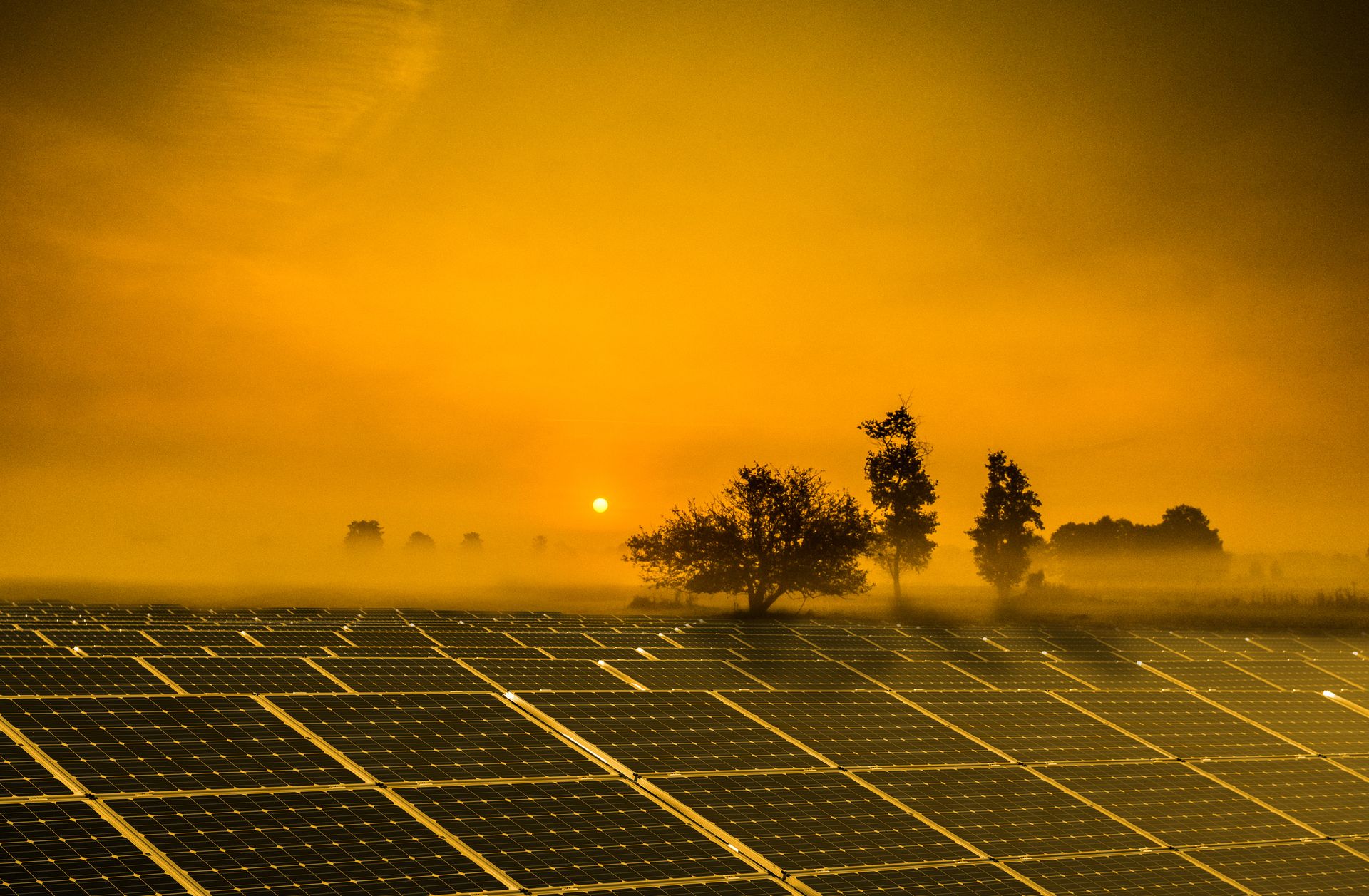
Imagine your company publishes an image of one of its production sites. For the new sustainability campaign, though, it looks a little bleak. The sky is gray, and there’s a large paved area in front of the building. So generative AI gives it a little help. The sky turns blue. A few trees appear. And wouldn’t solar panels look great on that big roof? A few seconds later, there they are.
The result doesn’t look AI-generated. It looks like a photograph.
There’s just one problem: The solar panels don’t exist.
Six months later, the image is sitting in the DAM, appearing on the website, in presentations, and maybe even in the sustainability report. By then, hardly anyone remembers that those solar panels were added to the roof with a prompt.
A company barbecue that never happened
The same thing works with people. On the careers page, we see photos from the summer barbecue and the holiday party. It looks like a company where people genuinely enjoy spending time together.
Except those events never happened.
Or take the employer branding campaign of a technology company. Female developers, engineers, and project managers everywhere. It looks like a company where women are well represented in technical roles.
Except they aren’t. The images were generated.
Is that necessarily a problem? Advertising has always staged reality. Stock photos show people who have never worked for the company. Photoshop has been altering images for decades.
What’s new is how easy it has become to create a believable reality.
Today, we don’t need an actual solar installation to create a photorealistic image of a production site with solar panels. We don’t need a company barbecue to produce pictures of one. We can even create the appearance of a diverse workforce without featuring a single real employee.
All it takes is a prompt. We have a trust problem
What’s real? What has been edited? And what was generated entirely by AI?
Generative AI isn’t the problem. It’s a fantastic tool for marketing and communications. But as the line between reality and creation becomes increasingly difficult to see, transparency becomes more important. Lawmakers are paying attention, too.
Since August 2, 2026, the transparency requirements under Article 50 of the EU AI Act apply.
However, the often-heard claim that “every AI-generated image now needs a visible label” is too simplistic. Additional disclosure obligations for companies apply in particular to deepfakes and certain AI-generated or AI-manipulated text published to inform the public on matters of public interest. The specific obligation therefore depends on the use case.
Still, the underlying idea is important: Provenance is becoming essential information about content.
The DAM should know
If a marketing team generates an image today and an agency edits it tomorrow, the answer to the question of where it came from shouldn’t be: “Ask Gabi. She worked on that back then.” That information belongs with the asset. It’s part of content governance.
The DAM should know:
- AI-generated
- AI-modified
- Approved
But storing that information in the DAM is no longer enough. With the DAM acting as a Content Control Center and the asset being delivered across channels via links, that information needs to travel with the content.
That’s exactly where DAMlivery, together with DAMlivery AI Labeling, comes in. If the DAM contains a value such as AI generated = Yes, DAMlivery can automatically turn that information into a label when the asset is delivered.
No one has to remember to add it during export.
If you made it, if it looks real, put a label on it.
Not every AI-generated image automatically requires a visible label. But maybe companies should still follow a pretty simple rule: If we create something that looks like reality, we should be transparent about it.
Not just because of the EU AI Act. Not just because of compliance. But because we want our customers to trust us.
In a world where three lines of prompting can make a company look greener, more diverse, and more employee-friendly than it really is, transparency becomes a key part of maintaining trust.
If you made it, if it looks real, put a label on it.