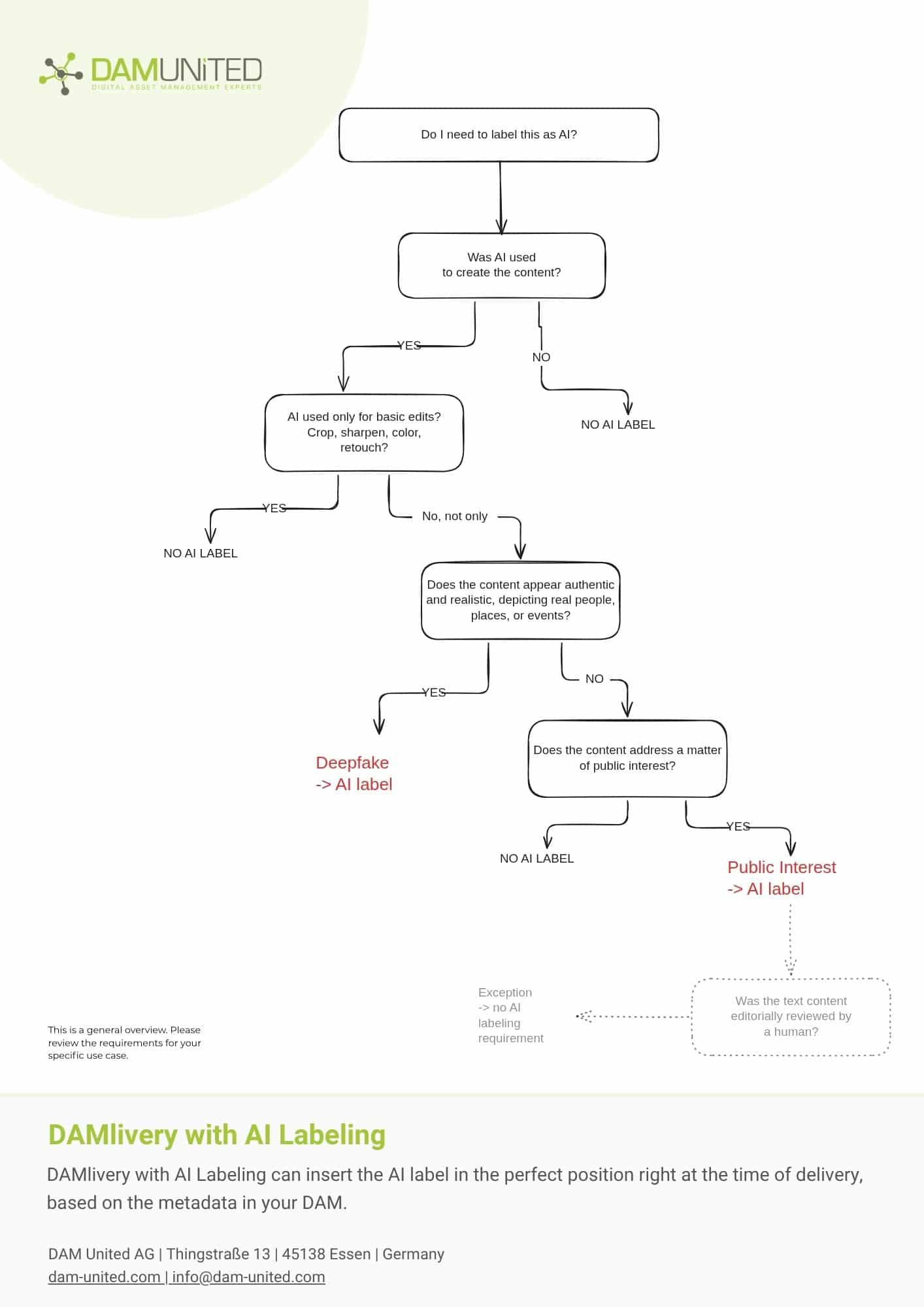
Two separate questions: Who uses AI-generated images most extensively? And who is required to label them? The two do not necessarily go hand in hand, because not every AI-generated image requires a label. Cheat Sheet AI Labeling Industries with the highest use of AI-generated images Marketing and advertising agencies
Content authenticity: Trust requires provenance
It’s Tuesday. Kurt, the company’s content owner, creates an image with AI for a new campaign. He uploads it to the DAM, adds the metadata, and approves it. Eddy needs the image for the website and crops it to 16:9. Sandra resizes it for the online store. For the
When companies suddenly look greener than they really are
Imagine your company publishes an image of one of its production sites. For the new sustainability campaign, though, it looks a little bleak. The sky is gray, and there’s a large paved area in front of the building. So generative AI gives it a little help. The sky turns
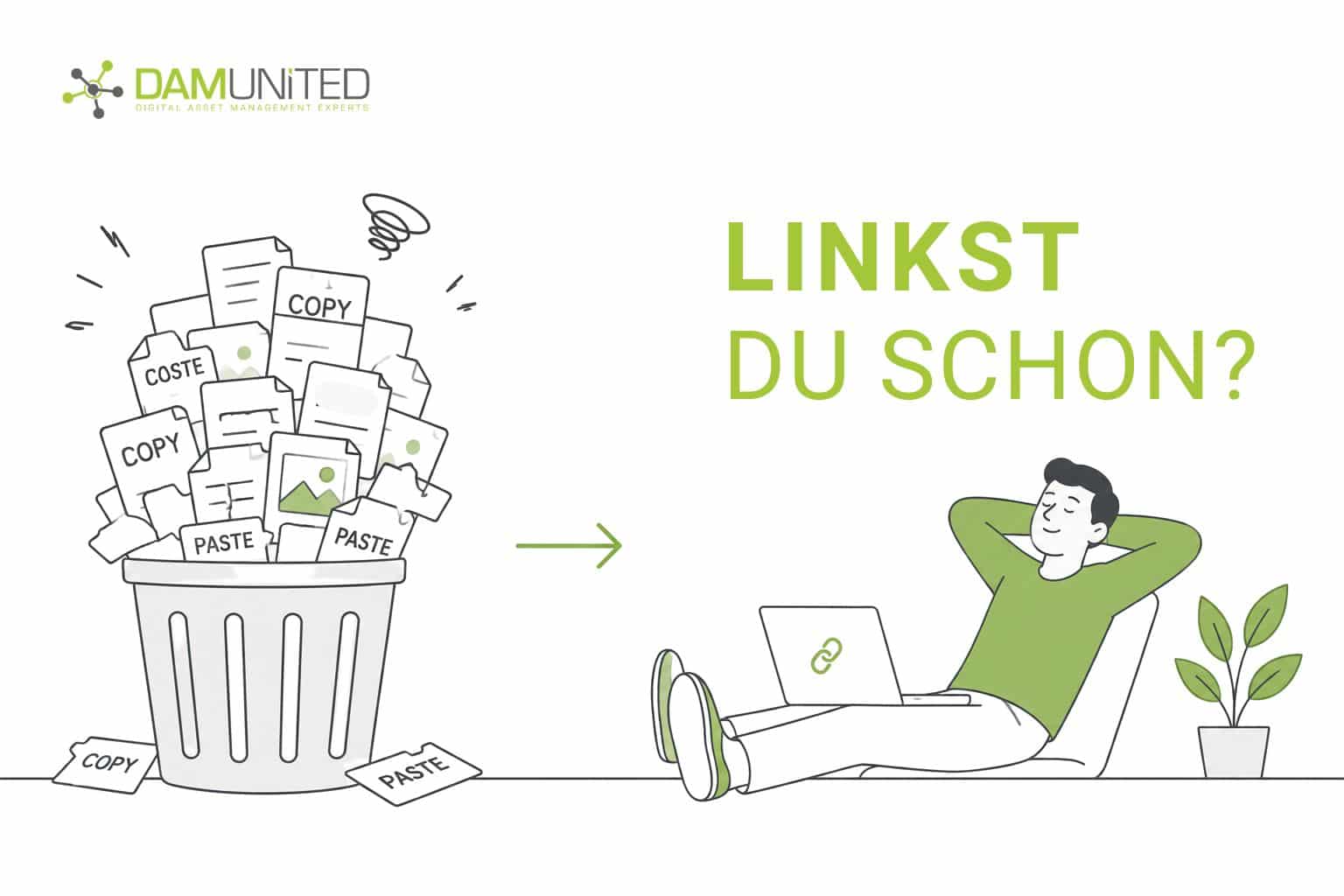
DAMlivery: Why your DAM images are similar to websites
DAMlivery: Why your DAM images are similar to websites Das Web-Prinzip, das wir alle verstehen Niemand lädt Wikipedia herunter, um einen Artikel auf einer Website anzuzeigen. Wir setzen einen Link. Der Link zeigt auf den Inhalt dort, wo der Inhalt lebt. Der Inhalt bleibt an seiner Stelle, wird zentral
What is DAM? a summer tale
Or: The tale of the file server who got very tired Once upon a time, there was a File Server. It lived in the IT basement, humming softly and feeling very proud. It always knew exactly where everything was. At least, it thought it did. If someone was looking
Why good search in DAM requires work
Why effective search in DAM is no accident “The image must be somewhere in the system…” We hear this phrase all the time in DAM projects. And it is often precisely this that surprises many companies: a Digital Asset Management system does not automatically work ‘like Google’. Upload a