
AI-generated images in corporate communications
Two separate questions: Who uses AI-generated images most extensively? And who is required to label them? The two do not necessarily go hand in hand, because not every AI-generated image requires a label.
Industries with the highest use of AI-generated images
- Marketing and advertising agencies / e-commerce: Product images, banners, personalized campaign visuals — adoption is particularly widespread because of the potential time and cost savings.
- Fashion & beauty: Virtual models, campaign images, product visualizations without a physical photo shoot.
- Media, publishers & digital magazines: Illustrations used as article headers or accompanying visuals, and as alternatives to stock photography.
- Real estate: Virtual home staging, renderings, and before-and-after visualizations.
- Automotive: Concept images and product configurators.
- Social media & influencer marketing: AI avatars and generated social media content on behalf of brands.
Who needs to label AI content — and when?
Since August 2, 2026, the transparency requirements under Article 50 of the EU AI Act have been binding. This obligation does not apply when AI-generated content has undergone human review or editorial control and a natural or legal person assumes editorial responsibility for its publication.
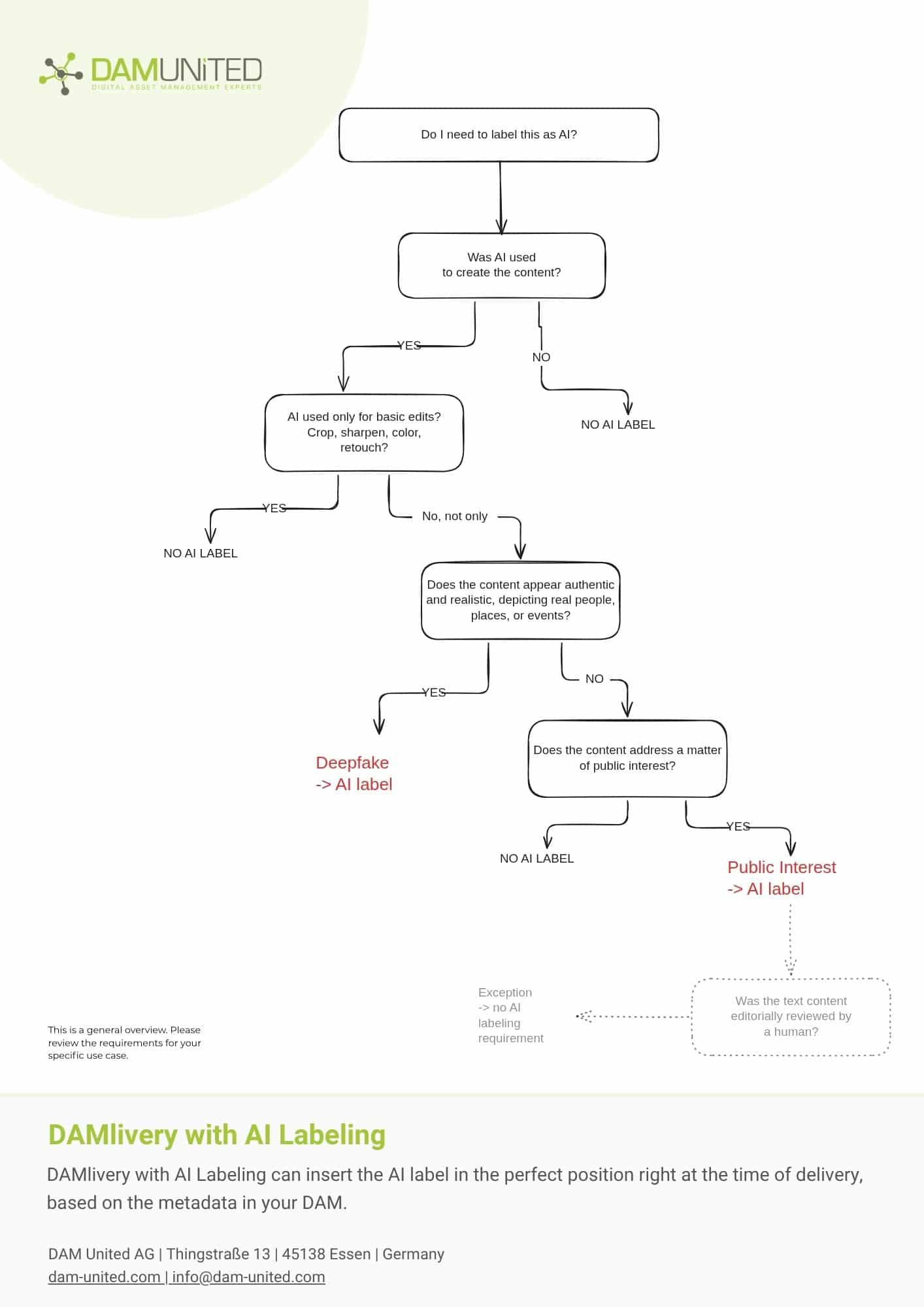
Content subject to labeling requirements primarily includes:
- Deepfakes: AI-generated or manipulated image, audio, or video content that resembles existing persons, objects, places, entities, or events and could falsely appear to a person as authentic or truthful. The consent of the person depicted does not affect this requirement.
- Content of public interest: AI-generated or manipulated text published to inform the public about matters of public interest without human review or editorial control.
Particularly affected in practice
- Media & publishers: A news website, digital magazine, or blog using AI-generated illustrations as header or accompanying images for articles must clearly disclose this, for example, in an image caption.
- Agencies & social media managers: Anyone managing social media channels on behalf of a company or brand and using AI-generated images or videos acts as the deployer and is responsible for the required labeling. This responsibility cannot simply be passed on to the client.
- Corporate, HR & training providers using AI avatars: A training video presented by an AI avatar must be labeled as AI-generated, for example, with a visible notice in the video or its description.
Important exceptions
Not every type of image editing falls under these requirements. Typical image optimizations such as automatic cropping, color grading, sharpening, noise reduction, or removing small distracting objects from the background do not alter the essential content of an image and therefore do not require a label.
There is also an exception for art, entertainment, satire, and fiction: For obviously fictional or artistic works, the disclosure may be presented in a way that does not unreasonably interfere with the display or enjoyment of the work.
Conclusion
The industries most affected are those that:
- produce large volumes of AI-generated visual content and
- use it to depict real people or events or to influence public opinion.
This particularly affects media organizations, marketing agencies, social media professionals, and companies using AI avatars.