Or: The tale of the file server who got very tired
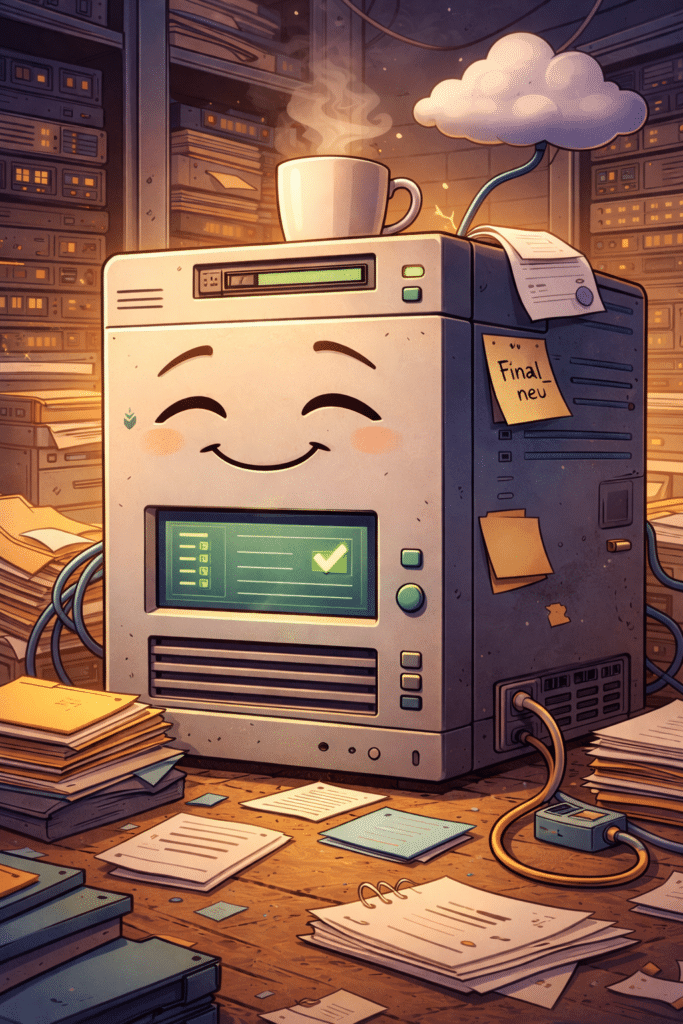
Once upon a time, there was a File Server. It lived in the IT basement, humming softly and feeling very proud. It always knew exactly where everything was. At least, it thought it did.
If someone was looking for a picture, it would send them to the “Marketing” folder.
Then to “Products.” Then to “Final.” Then to “Final_new.” And sometimes even to “Final_new_really_final.”
People hunted and searched and searched a bit more.
But in the end, they usually found something. And that was good enough.
The File Server was happy.
But then came the cloud
One day, a big, bright Cloud arrived. It brought new things with it: a website, an online shop, a newsletter, social media, and international markets. Suddenly, many systems wanted to access pictures at the same time.
“No problem,” the File Server said bravely. “I’ll save that.”
And so it saved. And saved some more. And then a little more.
Images were downloaded. Then uploaded again. Then saved in a different size. Then renamed. Then copied again.
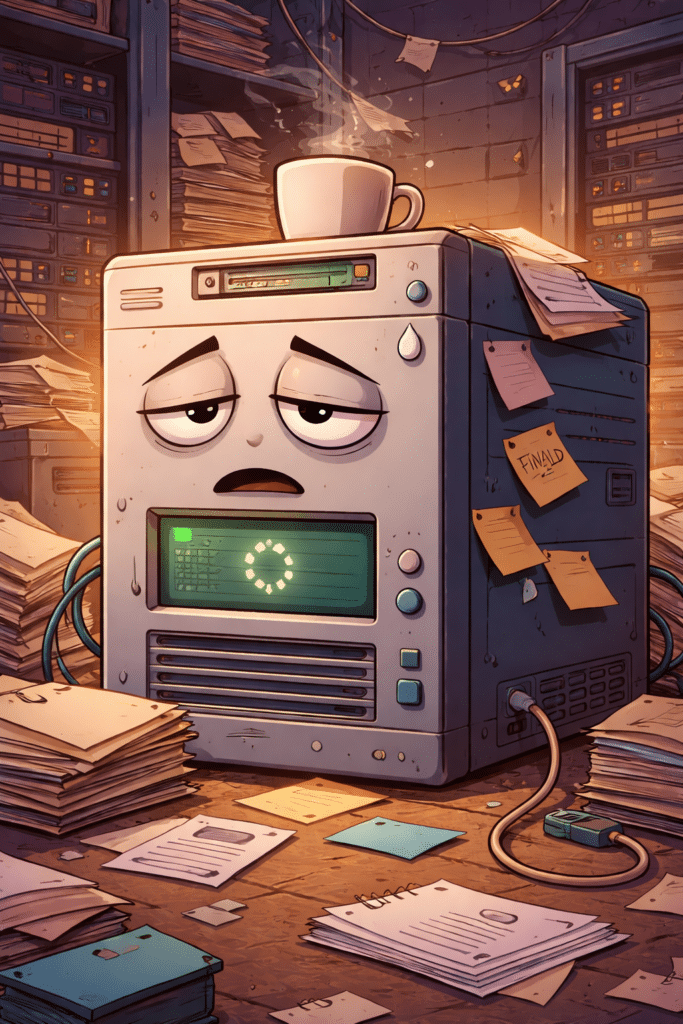
Eventually, the File Server didn’t even know which version was the right one.
The File Server had become very tired.
The people became restless.
“Is this the approved version?” “Can this picture be used in France?” “Where is the new logo?” “Why is the old product photo still in the shop?”
The File Server stayed silent. It was just a storage place, after all. It didn’t know who was allowed to use what. It didn’t know when licenses expired. It didn’t know which country had cleared the image.
It only knew folders.
And suddenly, folders were not enough.
And then came DAM.
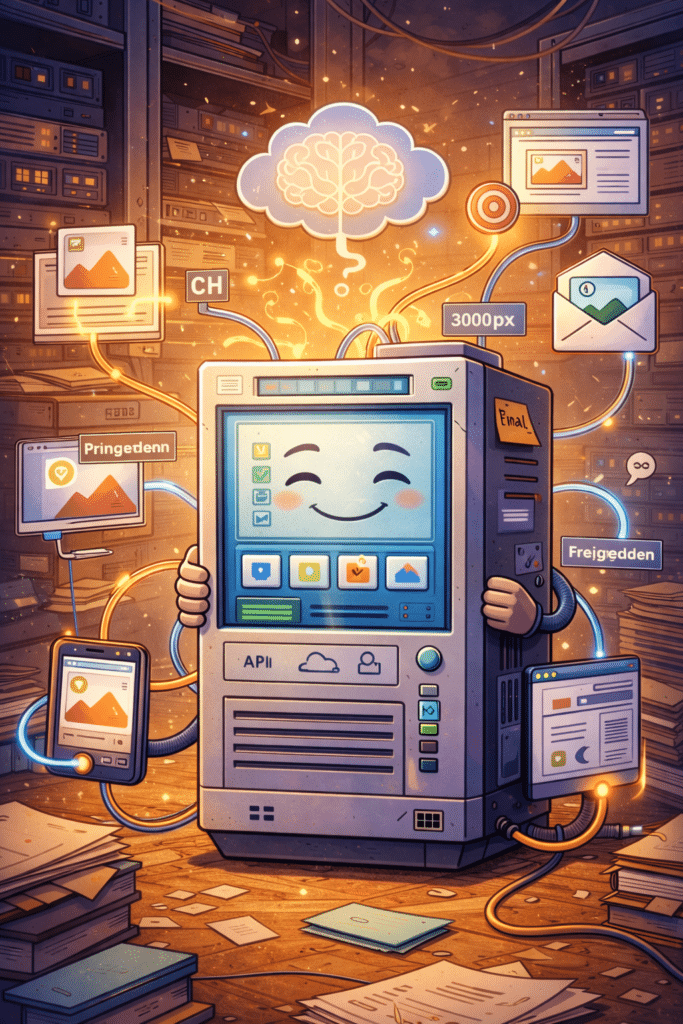
One day, a new creature entered the digital landscape. It called itself Digital Asset Management—or DAM for short. It looked like a library, but it thought like an organizer.
It didn’t just know where things were. It knew what they were.
This image? Approved for Switzerland. This version? Current. This license? Expires in three months. This file? Automatically delivered to the website and shop.
Suddenly, images didn’t need to be copied. They were shared intelligently.
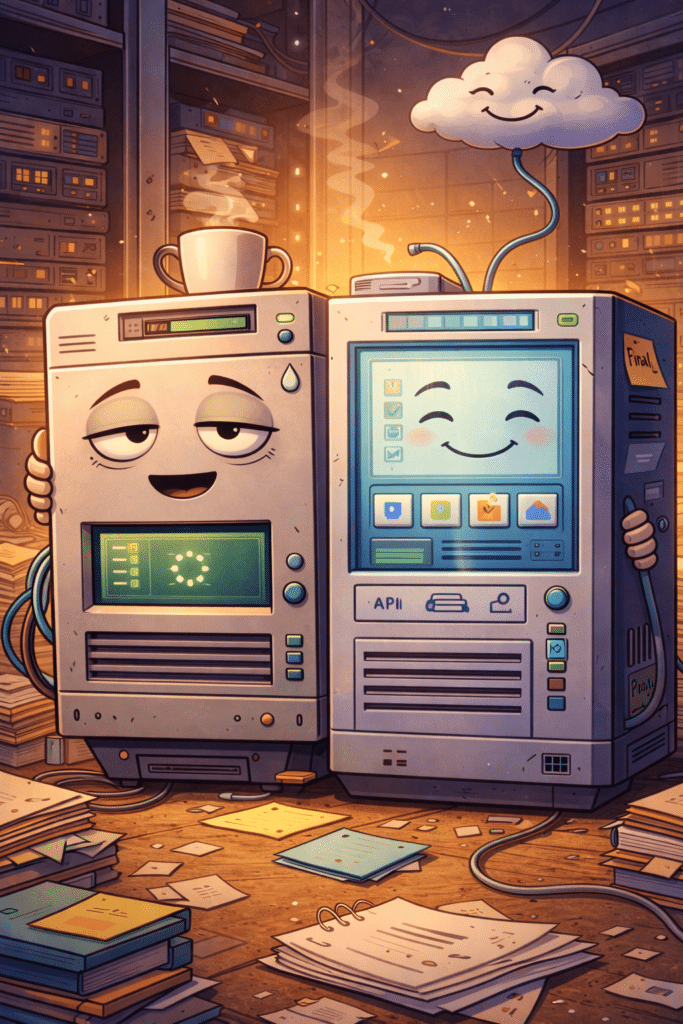
Suddenly, people didn’t need to guess. They could filter, search, and control. The File Server let out a sigh of relief.
It could go back to doing what it did best: storing.
The DAM did the thinking.
The moral of the story
A File Server isn’t a villain. It’s simply overwhelmed in a world that has grown faster, more connected, and more complex.
Digital Asset Management is therefore neither a luxury nor a gimmick.
It is the next evolutionary step when digital content becomes the heart of marketing, product communication, and brand management.
And perhaps it’s not about replacing the File Server at all.
But rather, finally giving it someone by its side to help out.
Because in the digital world, the truth remains: Anyone who wants to grow needs more than just a good place to file things.